

Beaver Valley Association for Lifelong Learning
SPRING SERIES: Food Security as Environmental Integrity Declines - Ralph C. Martin. Starts March 16, 2027
SPRING SERIES: Food Security as Environmental Integrity Declines - Ralph C. Martin. Starts March 16, 2027
Series Dates: March 16, March 23, March 30, April 6, April 13, April 20, 2027
Agriculture has been driven since WWII by a goal to produce adequate food as the human population rises. Problems with this approach include wasted food, excess livestock, unhealthy eating habits, concentration of farmland ownership and pollution. The possibilities to balance production with consumption are to reduce wasted food, increase the biodiversity of farmed plant species, draw down CO2 while improving soil health, address inequality and reduce dependency on fertilizers. Humans have yet to learn when we have enough.
March 16: Energy
Today about 50% of energy used in global agriculture is to manufacture and apply nitrogen fertilizer to support high yields. How can increasing energy use be decoupled from agricultural production?
March 23: Climate
In 1850, the atmospheric concentration of CO2 was 280 ppm; today it is 425 ppm. How does global agriculture contribute to, and impact, subsequent destabilizing climate systems?
March 30: Pollution
Novel entities including pesticides, PFAS, micro-plastics and reactive nitrogen in water and air are products of, and inhibitors to, agricultural food systems. What is a feasible way forward?
April 6: Waste
In developed countries up to 50% of food is wasted or lost, mostly in homes, and in developing countries at least 30% is lost in storage. Why does this waste continue?
April 13: Biodiversity
Global agricultural systems are displacing many wild species and their habitats while becoming more vulnerable to pests and diseases under monocropping and large livestock confinement. Does biodiversity have a chance to recover?
April 20: Land and Water
While agriculture displaces natural habitats, the built environment is encroaching on farmland. The quality of water for food production is declining while quantities are increasingly too much or too little. How could land and water management be improved?
Biography:
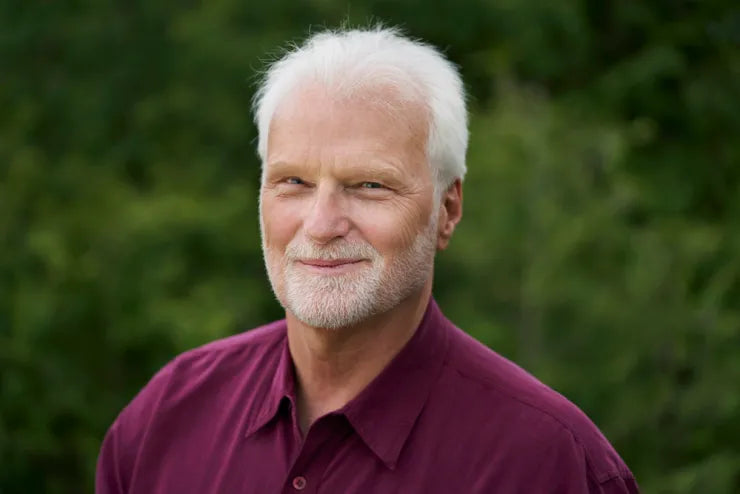
I grew up on a beef and hog farm in Wallenstein, Ontario. I also worked as a truck driver, bus driver and server. After earning a Ph.D. in Plant Science at McGill University in 1990, I was a faculty member at the Nova Scotia Agricultural College. In 2001, I founded the Organic Agriculture Centre of Canada to coordinate university research and education pertaining to organic systems, across Canada. From 2011 – 16, I was the Loblaw Chair, Sustainable Food Production and Professor, University of Guelph. I retired in 2019.
As the Director of the Organic Agriculture Centre of Canada, I felt gratitude that all employees knew and lived our vision, “sustainable and science-based organic agricultural systems, supporting healthy Canadian communities.”
Community service is central to my relationships with people and ecological systems. For example, I write op-ed articles (found here) and collaborate with the Ecological Farmers Association of Ontario and the Organic Science Cluster. I am honoured to be an ally of Indigenous Action Canada.
My 17 years in the Ottawa area helped me appreciate wilderness from the sterns of canoes and hiking trails. Later, after two decades of serving as a professor in Nova Scotia, I developed an appreciation for Maritime music, long yarns and oceans. My love of teaching grew unexpectedly in the 1990s and I appreciate how students teach me too. I have lived in Guelph and KW since 2011 and enjoy re-connecting in my home bio-region.
I frequently present invited talks about sustainable and organic agriculture, food security and topics related to my articles, at various community events. Feel free to contact me at rcmartin@uogulph.ca if you want me to speak to your group.
My appreciation for Indigenous ways of knowing has deepened with Miꞌkmaq teachers in Nova Scotia and Mohawk teachers in Ohsweken, Ontario. The Attawandaron and Mississaugas of the Credit sustained a living in SW Ontario, not just for centuries, but for millennia. I am grateful for the legacies of Anishinaabe, Haudenosaunee and Métis neighbours and recognize how addressing climate change, species loss and pollution requires partnerships with all indigenous people of this land.
Couldn't load pickup availability
Share

EMAIL SIGNUP